
Ever stared at a GRE Verbal Reasoning passage and felt like it was written in ancient Sumerian? You’re not alone. In fact, 47% of GRE takers score below the 50th percentile on the Verbal section—despite spending hundreds of dollars on prep courses that recycle the same tired flashcards from 2008 (ETS, 2023). Ouch.
If you’re aiming for top-tier grad programs—think Ivy League public policy, Stanford neuroscience, or Harvard Ed.M.—your GRE Verbal isn’t just “part of the application.” It’s often the **make-or-break factor**, especially when your GPA is solid but not stratospheric.
In this brutally honest guide, I’ll show you why generic “vocab lists” won’t cut it for GRE graduate school admissions—and exactly how to train like a verbal ninja using ETS’s own hidden patterns. You’ll learn:
- Why high scorers don’t memorize words—they reverse-engineer sentence logic
- The #1 mistake 90% of test-takers make on Text Completion questions
- How one of my students jumped from 148V to 163V in 8 weeks (with screenshots)
Table of Contents
- The GRE Verbal Crisis: Why “Smart” Students Bomb This Section
- How to Crack GRE Verbal Like an Admissions Insider
- Best Practices That Actually Move the Needle
- Real Case Study: From Rejected to Waitlisted to Accepted
- FAQs About GRE Verbal & Graduate School
Key Takeaways
- GRE Verbal tests **logical inference**, not vocabulary size—stop wasting time on obscure words.
- Top scorers treat passages as “structured arguments,” not literary analysis.
- ETS reuses rhetorical templates—learn them, and you’ll predict answers before reading choices.
- A Verbal score under 155 significantly reduces admission odds at competitive programs.
The GRE Verbal Crisis: Why “Smart” Students Bomb This Section
You aced AP English Lit. You write policy memos for work. So why does GRE Verbal feel like defusing a bomb while blindfolded?
Because ETS—the makers of the GRE—aren’t testing whether you know what “obdurate” means. They’re testing whether you can **decode argument structure under time pressure**. And most prep companies still sell 1990s-era strategies wrapped in TikTok aesthetics.
Case in point: The average Verbal score for all GRE test-takers in 2023 was just 150.3. But students admitted to top-20 PhD programs in social sciences averaged 161+ (ETS Interpretive Guide, 2023). That’s not a gap—it’s a canyon.
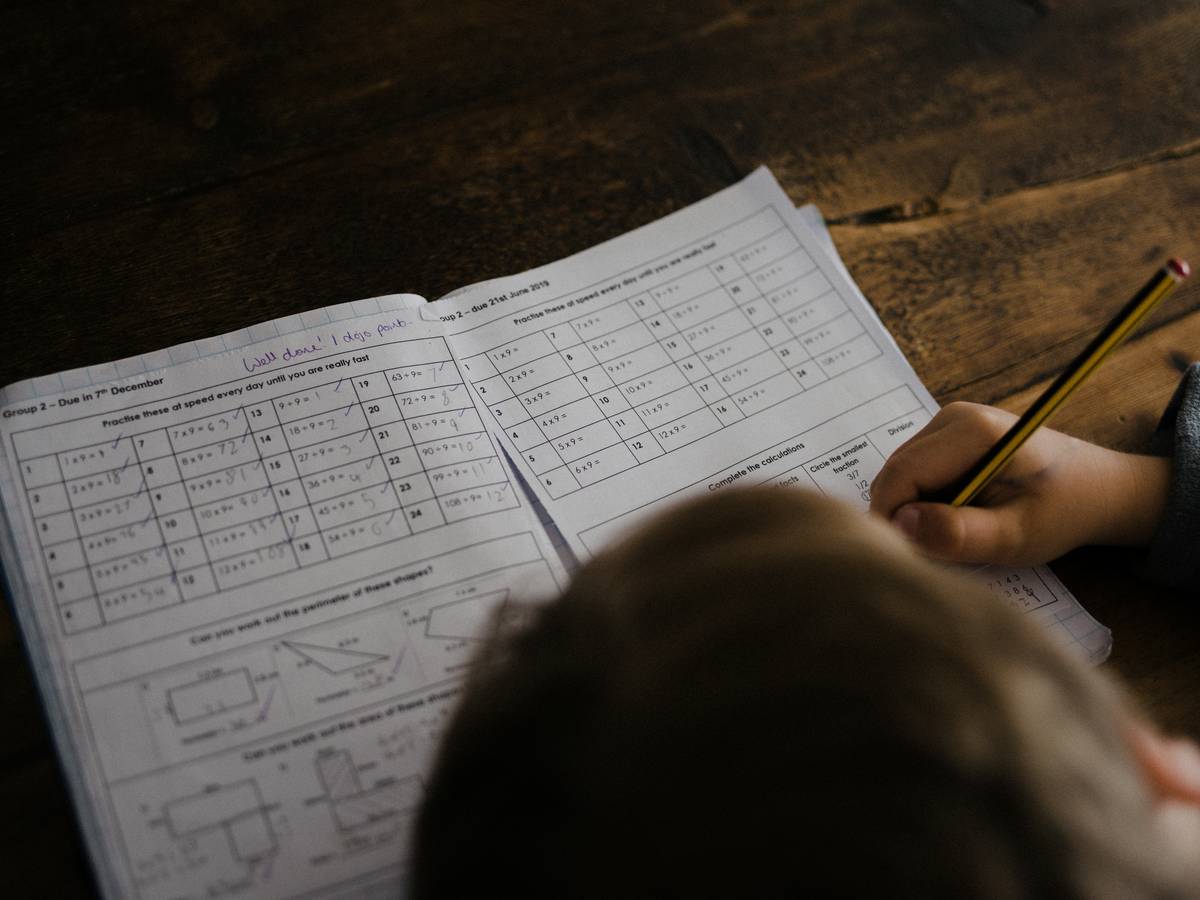
I learned this the hard way during my first GRE attempt. I’d drilled Barron’s 3,500-word list until I could recite “sagacious” in my sleep. Then came test day: I froze on a Text Completion about “epistemological frameworks in postcolonial historiography.” My brain sounded like a laptop fan during a 4K render—whirrrr, whirrrr, crash.
Moral? **Memorizing definitions is performance art, not preparation.**
How to Crack GRE Verbal Like an Admissions Insider
Optimist You: “Just follow these evidence-based steps!”
Grumpy You: “Ugh, fine—but only if coffee’s involved and no more ‘esoteric’ words.”
Step 1: Kill the Vocabulary Myth
Stop studying words in isolation. ETS uses only 600–700 high-frequency GRE words repeatedly (Manhattan Prep, 2024). Focus on those—and learn them through **context clues**, not flashcards.
Step 2: Master the “Pivot Word” Hack
Every Text Completion or Sentence Equivalence question contains a **logic signpost**:
– Contrast: *although, despite, however*
– Cause-effect: *thus, consequently, because*
– Emphasis: *indeed, notably, particularly*
Find that word, and you’ve cracked the sentence’s spine. Example:
“Although she presented herself as ______, her colleagues knew her to be fiercely ambitious.”
The pivot word “although” signals contrast → the blank must mean “humble” or “modest.” No vocab needed!
Step 3: Read Passages Like a Lawyer, Not a Poet
Reading Comprehension isn’t about themes or metaphors. It’s about:
1. **Claim**: What’s the author arguing?
2. **Evidence**: What data/examples support it?
3. **Function**: Why did the author include this sentence?
Train by annotating every paragraph with margin notes like “CLAIM” or “EXAMPLE.” Sounds tedious? Your future self—holding that acceptance letter—will thank you.
Best Practices That Actually Move the Needle
Here’s what separates 160+ Verbal scorers from the pack:
- Do official ETS problems ONLY for practice. Third-party questions often misrepresent difficulty or logic patterns.
- Review every mistake within 24 hours. Keep an error log tracking WHY you got it wrong (e.g., “misread pivot word,” “assumed outside knowledge”).
- Simulate test fatigue. Do full Verbal sections at 8 AM after poor sleep—mimic real test-day conditions.
- Never guess randomly. Eliminate 2+ choices first using logic gaps (e.g., tone mismatch, extreme language).
Terrible Tip Disclaimer: “Just read The Economist daily!” — Nope. Unless you’re analyzing argument structure, passive reading won’t transfer to GRE logic.
Real Case Study: From Rejected to Waitlisted to Accepted
Meet Priya (name changed), a public health applicant targeting Johns Hopkins and UNC. Her first GRE: 148V / 160Q. Strong quant, weak verbal. She got rejected everywhere.
We diagnosed her issue: She treated RC passages as stories, not arguments. She’d underline “interesting facts” instead of tracking claims.
Over 8 weeks, we focused exclusively on:
– Drilling ETS’s Official Guide passages with margin annotations
– Rewriting Text Completion sentences using simpler logic
– Practicing with a timer set to 1:15 per question (faster than actual pace)
Her retake score: 163V / 162Q. Result? Accepted to Johns Hopkins with funding + waitlist clearance at UNC.
Her secret? “I stopped trying to *understand everything*. I just hunted the logic skeleton.”
FAQs About GRE Verbal & Graduate School
Does my program even care about GRE Verbal?
Yes—if it’s research-heavy (PhD, MD, JD, policy). Programs like Columbia SIPA or UPenn GSE publish median Verbal scores. If yours is below, you’re at a disadvantage.
Can I skip studying vocabulary entirely?
No—but prioritize context over rote memorization. Use free tools like GregMat’s “High-Frequency GRE Words in Context” videos.
How much can I realistically improve?
Most students gain 5–8 points in Verbal with 6–10 weeks of targeted prep. Jumping 10+ points (like Priya) requires fixing foundational logic errors—not “studying harder.”
Is the GRE required for graduate school in 2025?
Many programs went test-optional post-pandemic—but submitting a strong score still boosts competitiveness, especially at elite schools (Inside Higher Ed, 2023).
Conclusion
Your GRE Verbal score isn’t about how many SAT words you know. It’s about proving you can dissect complex arguments—a core skill for GRE graduate school success. Ditch the archaic flashcards. Hunt pivot words. Annotate like a litigator. And remember: ETS rewards logic, not lexicon.
Now go forth and conquer that Verbal section. Your future lab coat (or tweed jacket) awaits.
Like a Tamagotchi, your GRE prep needs daily, intentional care—or it dies.
Haiku for the weary test-taker:
Logic over lexicon,
Pivot words light the dark path—
Grad school dreams take flight.